chivvy. Start a conversation
What we doPractice PortalWorkHow we workGuidesArticlesAboutFree toolContactStart a conversation
For accountancy practices

Automating the jobs
a practice repeats

Records chasing, deadline reminders, onboarding, AML re-checks, query lists. The work every practice does hundreds of times a year and nobody enjoys doing once.

The problem

A practice runs on a small number of jobs repeated an enormous number of times. Chase the records. Remind them the deadline is coming. Onboard the new one. Re-run the AML check. Ask the same six questions about the same six things, on every job, all year.

None of it is hard and all of it is relentless, which is why it slips. The partner does it at ten at night, or it does not get done and the January queue gets worse.

This is the work worth automating first, because a mistake is cheap and visible rather than expensive and silent — and because nothing reaches a client without somebody pressing send.

What we build
01

Records chasing

Who has not sent what, ranked by how close the deadline is. A chase drafted per client with the outstanding list attached, escalating on a schedule you set, and stopping the moment the records arrive.

02

Deadline reminders that mean something

Not a calendar alert. A message to the client that names what is due, what you still need from them and what happens if it is late, built from their own filing history.

03

Onboarding

Engagement letter out, AML started, authorisations requested, software access set up, previous accountant written to — in order, with what is outstanding visible to the whole team.

04

AML re-checks

Re-screening on a schedule rather than when somebody remembers, with the evidence filed where an inspector can see it.

05

Query lists

Queries gathered into one list per job rather than emailed as they occur, with a due date and an escalation when it is missed.

06

Companies House watching

Confirmation statements, accounts due dates, officer changes and charges on every client, picked up the day they change rather than the month you look.

Proof

Built for a practice, by the people running it

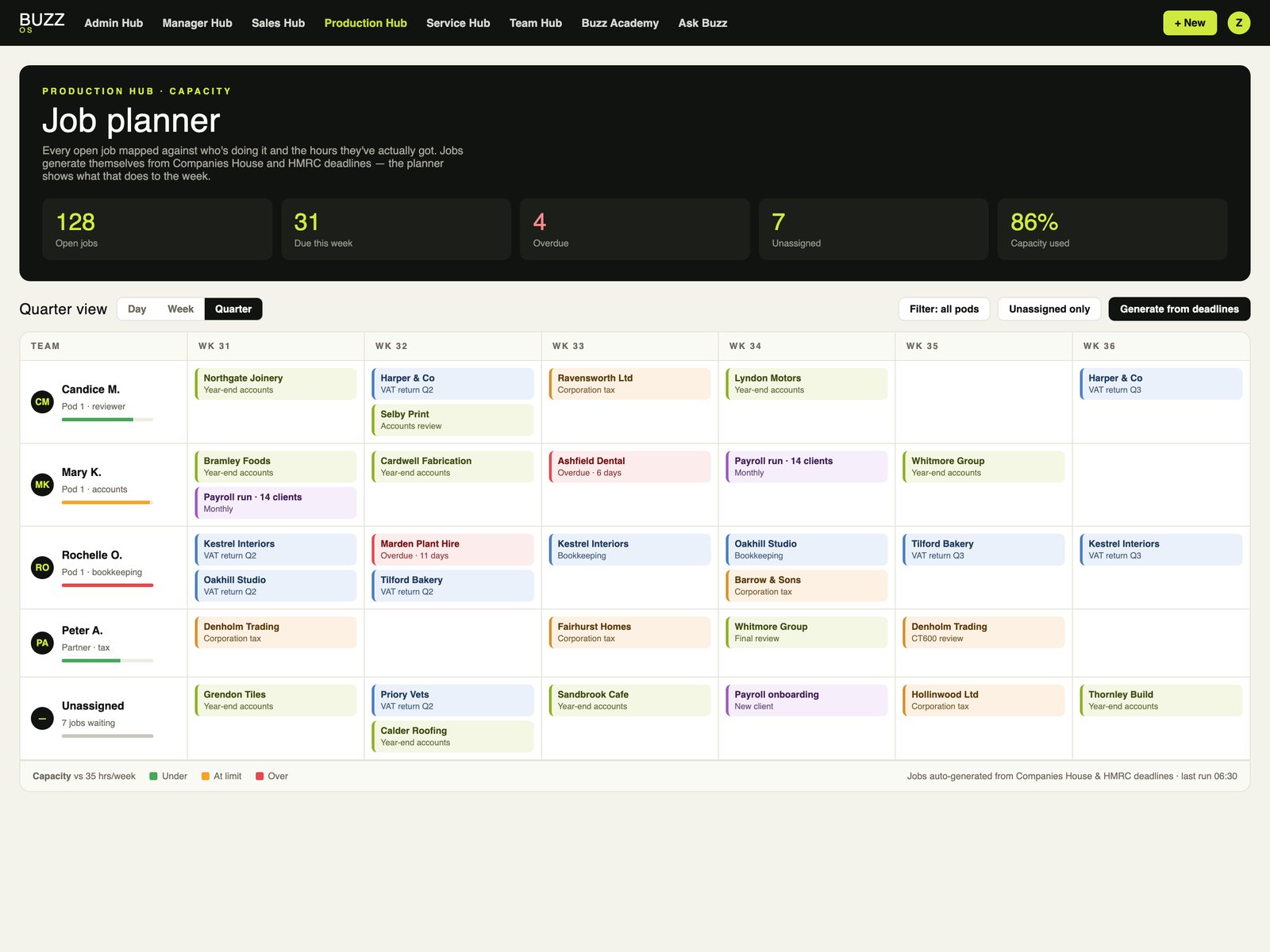
Buzz OS is the platform Andy built for his own firm — onboarding, deadlines, client records, comms and reporting in one place. Everything on this page exists because a practice needed it, not because it demoed well.

os.buzzaccounting.co.uk — job planner
Built for a practice, by the people running it
Case study

The practice operating system

Twenty-plus modules, 487 live clients, six AI agents and full HMRC Making Tax Digital filing. Replaced every piece of third-party practice software.

Read the case study →
Straight answers

The things people ask.

Will it email my clients without me seeing it?

Not unless you decide it should. The default is an approval queue — the work gets found, the message gets drafted, a person presses send. For the dullest reminders some firms turn that off deliberately, and that is a choice they make rather than the setting we ship.

Does this replace my practice management software?

No. We read from what you already run. If a system genuinely cannot be read we tell you at the audit stage rather than three weeks into a build.

What about client confidentiality?

The work happens against your own systems with keys you create and can revoke. Nothing is copied into a shared database, and every automated action is logged and attributable.

How much does it cost?

A fixed price for the build, agreed before anything starts, plus a small monthly fee for hosting and AI usage. One automation is usually days rather than weeks. We quote after a short technical check, never before.

We are five people. Is this for firms our size?

Yes, and the smaller the firm the more of it the owner is doing personally. What decides it is how many times a year you repeat the same job.

Read more

Written on this, at length.

Get started

Tell us what's eating your week.

Tell us the job that keeps not getting done. We'll tell you if software can take it off you, and what it costs.

Straight to Andy, who'd be the one building it. No obligation, no follow-up sequence.