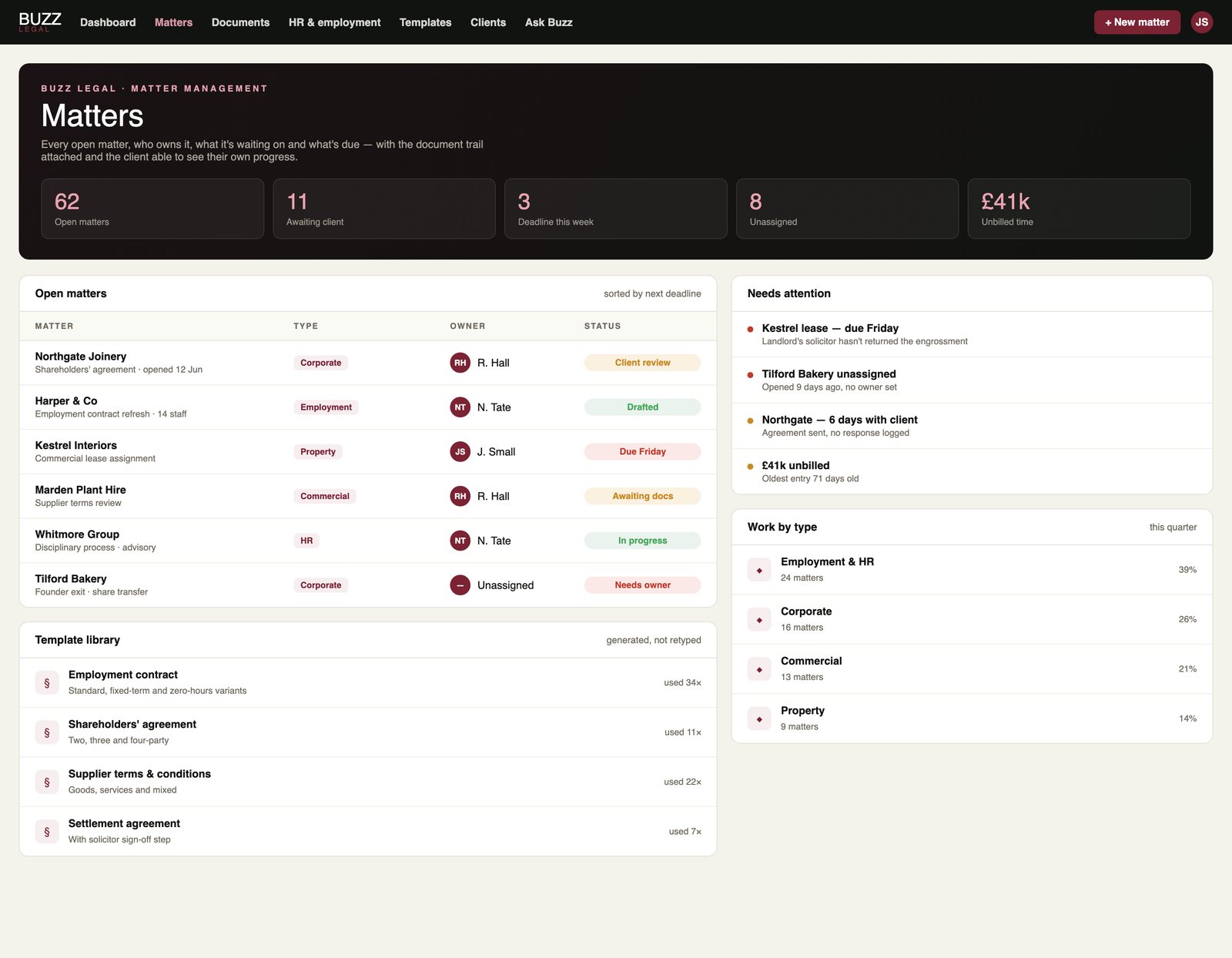
Twenty-plus modules, 487 live clients and HMRC-grade tax filing — built from scratch to replace every piece of third-party practice software.
Every practice-management product on the market was evaluated and rejected. The objection wasn't price — it was that each one turned out to be a project-management tool with accountancy labels on it. None handled a two-pipeline sales CRM, staff capacity against real hours, and deep Companies House and HMRC integration in a single flow. Getting all three meant three subscriptions and a person to reconcile them.
So we built it instead. Not a prototype: the actual system the firm runs on, with 487 clients migrated off Xero Practice Manager and the old software switched off.
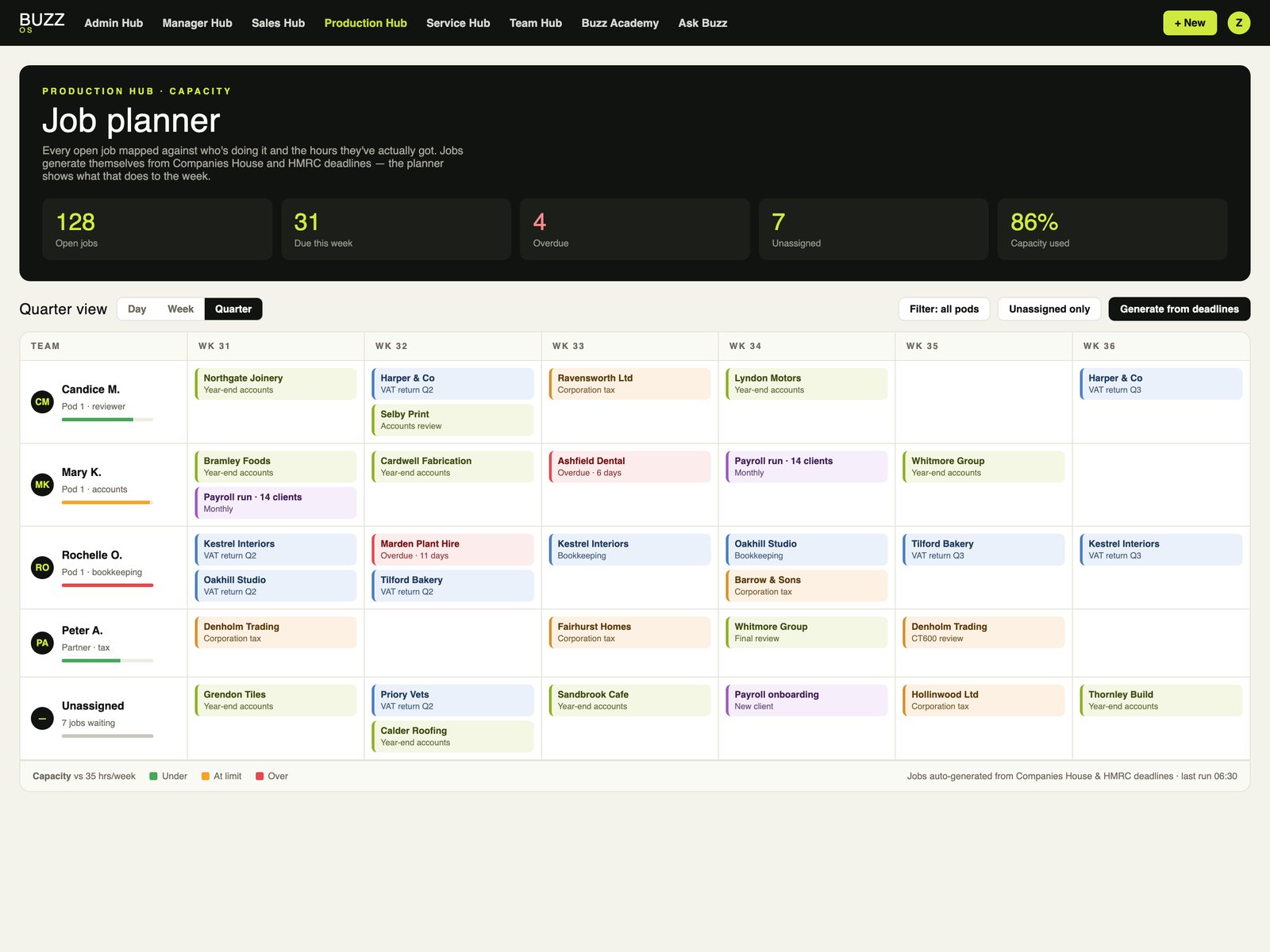
It kept growing because each module made the next one obvious. Once client records held Companies House data, deadlines were automatic. Once deadlines were automatic, jobs could generate themselves. Once jobs existed, capacity was measurable. Once capacity was measurable, the planner was worth building.
The last stretch was the hardest and the most valuable: making it fit to file tax returns with HMRC as an agent. That's a different class of software, with a compliance bar to clear and no room for approximation.
The firm still pays for Xero, BrightPay and its tax software. Those are regulated engines with continuous compliance burdens, and rebuilding them would be reckless.
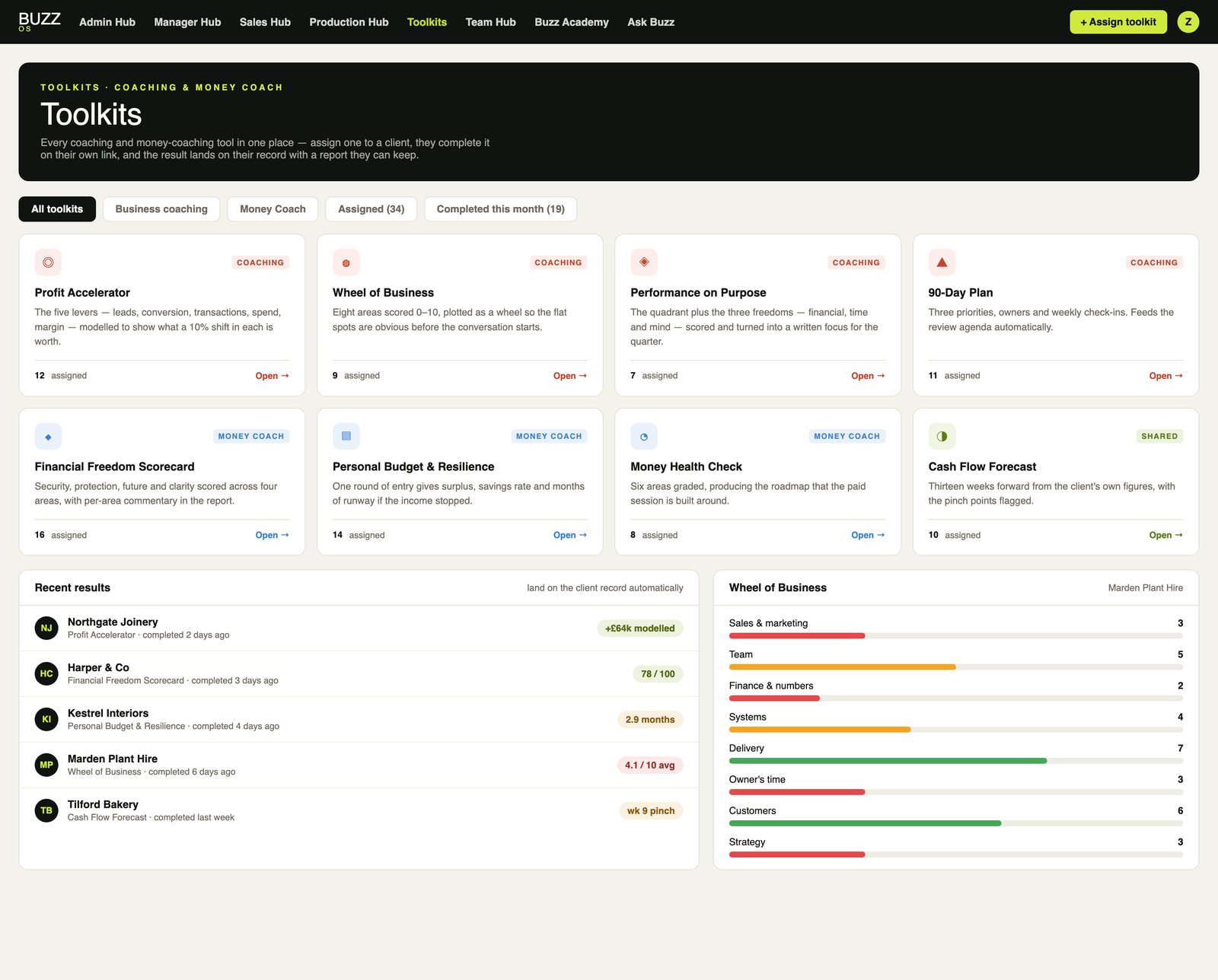
What got built is the layer those things plug into: the CRM, the jobs, the capacity, the onboarding, the client portal. That's where the firm's actual way of working lives, and it's the part no product could fit.
Client-facing software usually dies on the password. Ask a busy business owner to create an account to approve one proposal and a good proportion simply don't.
Every client gets a private tokenised link instead — no account, no password, bookmarkable. The same pattern runs e-signature, direct debit setup and the new-client form. Adoption went from a hurdle to a non-issue.
Six agents run daily: chasing information requests, nudging stalled onboarding, triaging the inbox, pre-reviewing jobs before a human review, orchestrating each new client.
Not one of them sends anything unsupervised. Everything lands in an approval queue, and anything ignored twice escalates to a partner. The value is in the drafting and the noticing — the send button stays human, deliberately.
The internal assistant answers staff questions about tax and the practice. A model answering from memory would be confidently wrong about rates and thresholds.
So it can't answer from memory. It retrieves from a curated knowledge base and live practice data through defined tools, and it's told to say when it doesn't know. Every question and answer is logged, and there's an escalate-to-a-partner button on every response.
Buzz OS cleared HMRC's full production checklist for Making Tax Digital agent software, with every submission type verified end to end against HMRC's own sandbox — records, quarterly updates, year-end and Final Declaration. That's the highest compliance bar in UK accounting software, met by a platform we built ourselves.
Tell us the job that keeps not getting done. We'll tell you if software can take it off you, and what it costs.
Straight to Andy, who'd be the one building it. No obligation, no follow-up sequence.