Work → Case studies → Business Nous
An online academy built from scratch
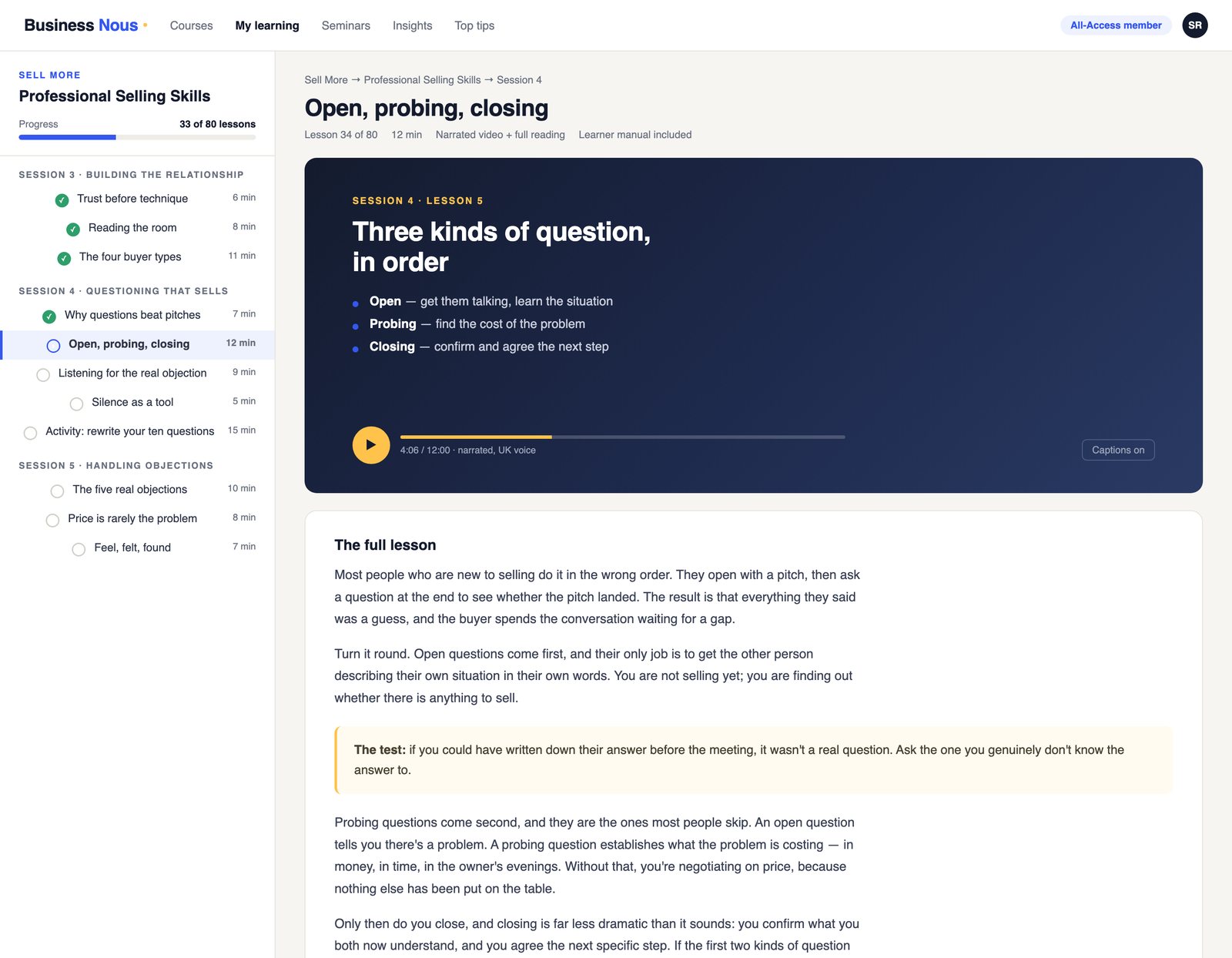
Lesson 1
A library of manuals on a hard drive
A large library of licensed courseware sat on a hard drive as Word documents. The material was good and licensed for commercial resale, and as a product it was unusable in that form.
A hosted course platform would have taken a percentage of every sale for as long as the courses sold, and the catalogue would have lived inside somebody else's business. So the platform was built: catalogue, checkout, member accounts, course player, progress tracking and certificates.
Lesson 2
Fifty courses in six tracks
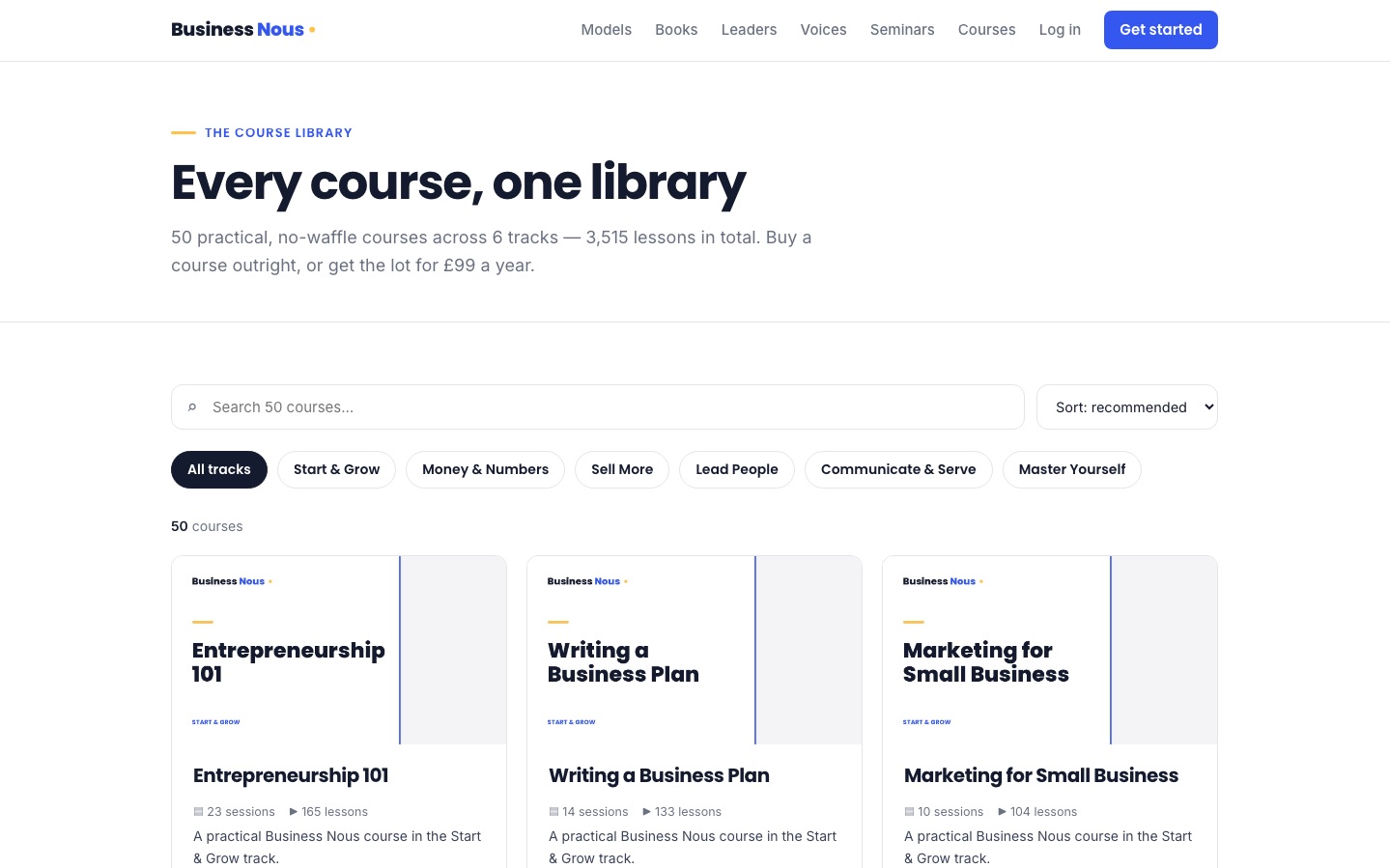
A course costs £19, or £99 a year buys all fifty. Andy's nine business seminars sit alongside them, and the founder stories, books and business models stay free to read.
Lesson 3 · now playing
Reading each manual's own contents page
The first extraction pass produced tidy summaries of each course. A six-lesson skim of a full-day course reads as a brochure, so the extractor was rebuilt. It now reads each manual's own table of contents as the lesson map and pulls the full text underneath every heading.
First pass
Rebuilt from the contents page
One course, before and after the rebuild. Each bar is a lesson.
Lesson 4
Three things from one source
A learner manual
A branded workbook for every course, generated from the same content the lessons use, so the two cannot drift apart.
Narrated video
Branded slides and a UK voice, rendered on a machine the business controls. No per-minute video bill.
A certificate
Issued on completion, with progress tracked for each learner across every course.
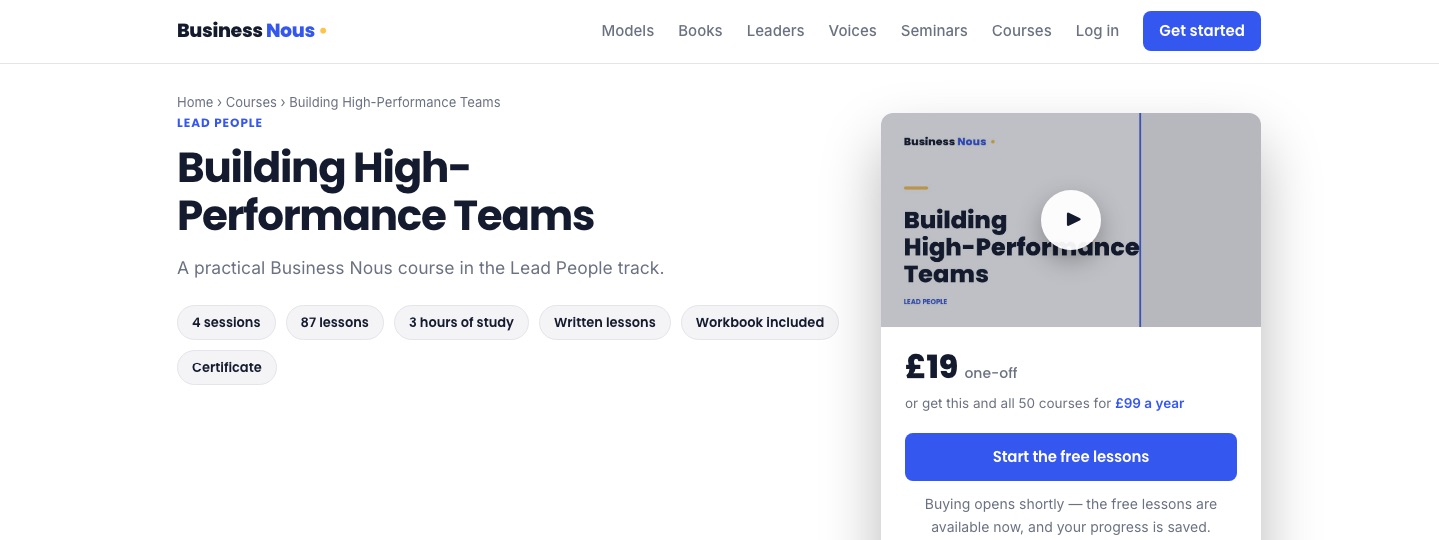
The seminars are built from real speaker notes, so the narration is the talk as it was given. An insight feed of business models carries an original diagram for each one, and an admin panel shows learners, enrolments, revenue and completions.
Lesson 5
A full test mode from day one
The whole platform runs on a local mock: sign-up, purchase, enrolment, progress and certificates, with no payment or database keys. It could be shown and reviewed before a single account existed, and it switches to the real services when the keys are added.
Lesson 6
Adding a course is a run of the extractor
The manual, the video and the certificate come with each run. The library can keep growing without a project for every course.
Netlify · Supabase · Stripe · Python course builder · Claude · Local video render
Next case studyBusiness Stuff▶