One build script
Every page is produced from structured content. Section pages, feeds and the sitemap are rebuilt correctly on every run, so nothing goes stale when a piece is added.
Business Stuff is a working title for founders and small firms: news, practical insights, first-person articles and a shelf of free calculators. Every page is generated from structured content by one build script, and the publishing runs on a schedule.
Built and run by Chivvy · 4 min read
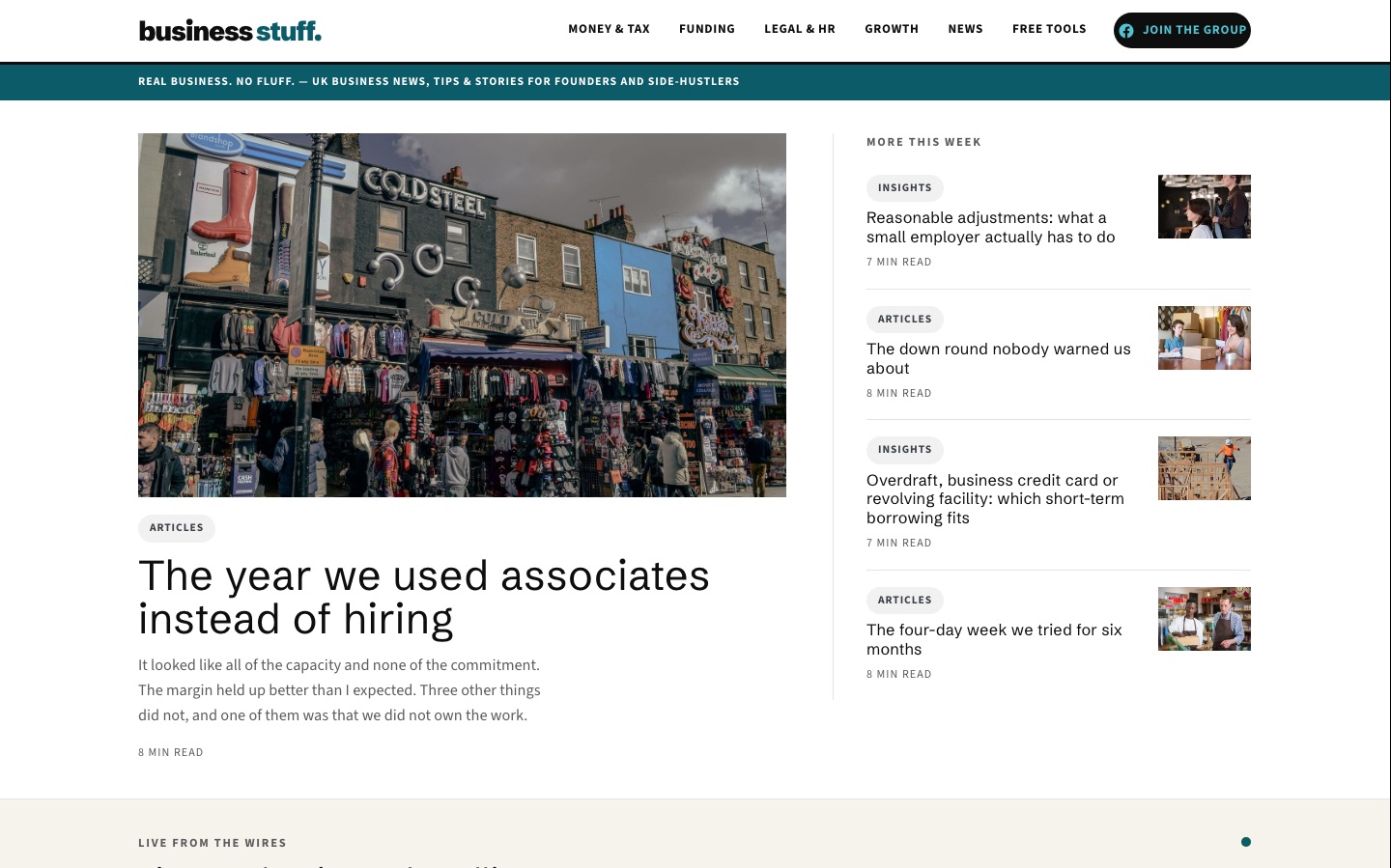
Owned media is the cheapest source of enquiries a business can build, and the hardest to keep going. Writing every week is a job that loses to every other job.
Business Stuff was built so the schedule does not depend on anyone’s spare time. It is laid out like a magazine, with a front page, sections for money and tax, funding, legal and HR, growth and news, and a lead story that changes as new pieces go out.
There is no content management system behind it. Articles, insights, calculators, section pages, feeds and the sitemap all come out of one Python build script reading structured content. A change to the template changes every page in the title on the next build, with no plugins to update and no admin login to protect.
The summaries of business books that began on Business Stuff have since moved to their own sister title, Business Nous. Old links to them forward to the new home.
Two pieces a week, at nine in the morning: a practical insight every Tuesday and a longer first-person article every Thursday, with a reaction piece when the news calls for one. These are the real titles from three weeks in September 2026.
Insights Articles Reaction to the news · Drafts are prepared at the weekend and published on the day without anyone pressing a button.
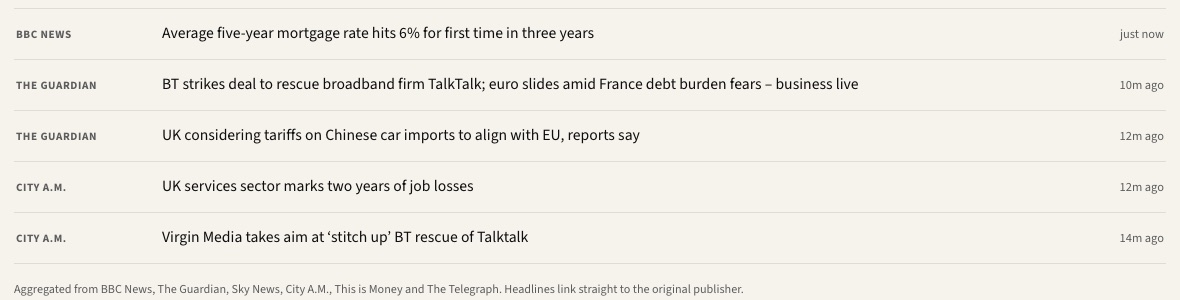
Between the scheduled pieces, the front page carries live UK business headlines gathered from BBC News, The Guardian, Sky News, City A.M., This is Money and The Telegraph. Each headline links straight to the publisher that wrote it.
It means the title looks current every hour of the day, while the writing budget goes on the two pieces a week that are its own.
“Real business. No fluff.”
The line under the Business Stuff masthead
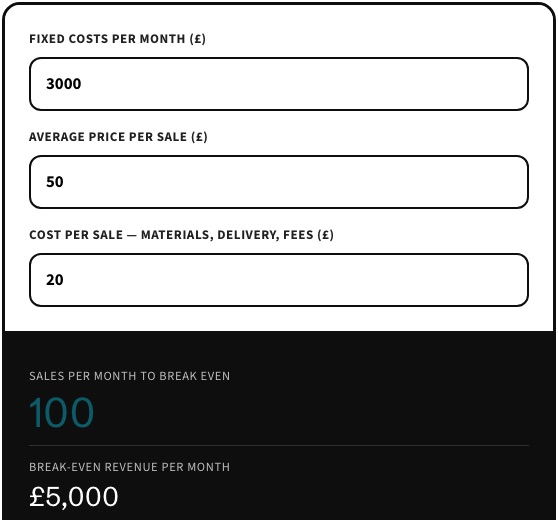
The tools work as soon as the page opens, with no form in front of them. Each one sits next to a plain explanation of the sums, and every article that touches the same subject ends with a line inviting the reader to put in their own figures.
Every page is produced from structured content. Section pages, feeds and the sitemap are rebuilt correctly on every run, so nothing goes stale when a piece is added.
Pieces are drafted ahead, queued with their dates and published on Tuesday and Thursday mornings. The live site is rebuilt and deployed in the same step.
The build matches each article to the calculators on the same subject and links them, so the tools are found from the pages people arrive on.
Readers can sign up for the newsletter, which starts with a welcome sequence through Brevo, or join the Business Stuff group on Facebook from the masthead.
Colophon. Business Stuff is set in Schibsted Grotesk and Source Sans 3, generated by a Python build script, published on Netlify, with email through Brevo and drafting help from Claude. The screenshots are of businessstuff.uk as it stood in October 2026.
Tell us what your business should be writing about. We will tell you what it takes to build and run it, and what it costs.