chivvy. Start a conversation
What we doPractice PortalWorkHow we workGuidesArticlesWho we areFree toolContactStart a conversation
Case study · Practice Portal + Growth Engine

Practice software,
productised

Two products from one platform: Practice Portal serves the clients a firm has; Growth Engine — website, CRM and proposals accepted online — wins the next ones. Both white-label, both self-serve.

The brief

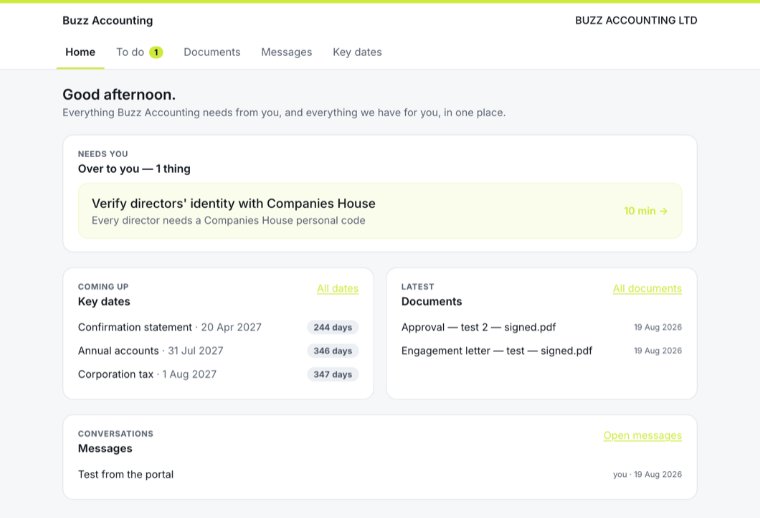
Buzz OS proved the pattern: clients open a private link, prove themselves with a six-digit emailed code, and everything an accountant needs from them — documents, requests, approvals, signatures — happens in one place. But Buzz OS is one firm's operating system. The question was whether the client-facing half could be rebuilt as a product any firm could run, in its own colours, without us in the room.

It could, and it took days rather than months. Every firm gets its own walled-off slice of the database — the walls are enforced in the database engine itself, not in application code — with its logo and colour on every screen and every email. Add a client by company number and Companies House fills in the rest: officers, year end, filing dates, and who still needs the new director identity checks.

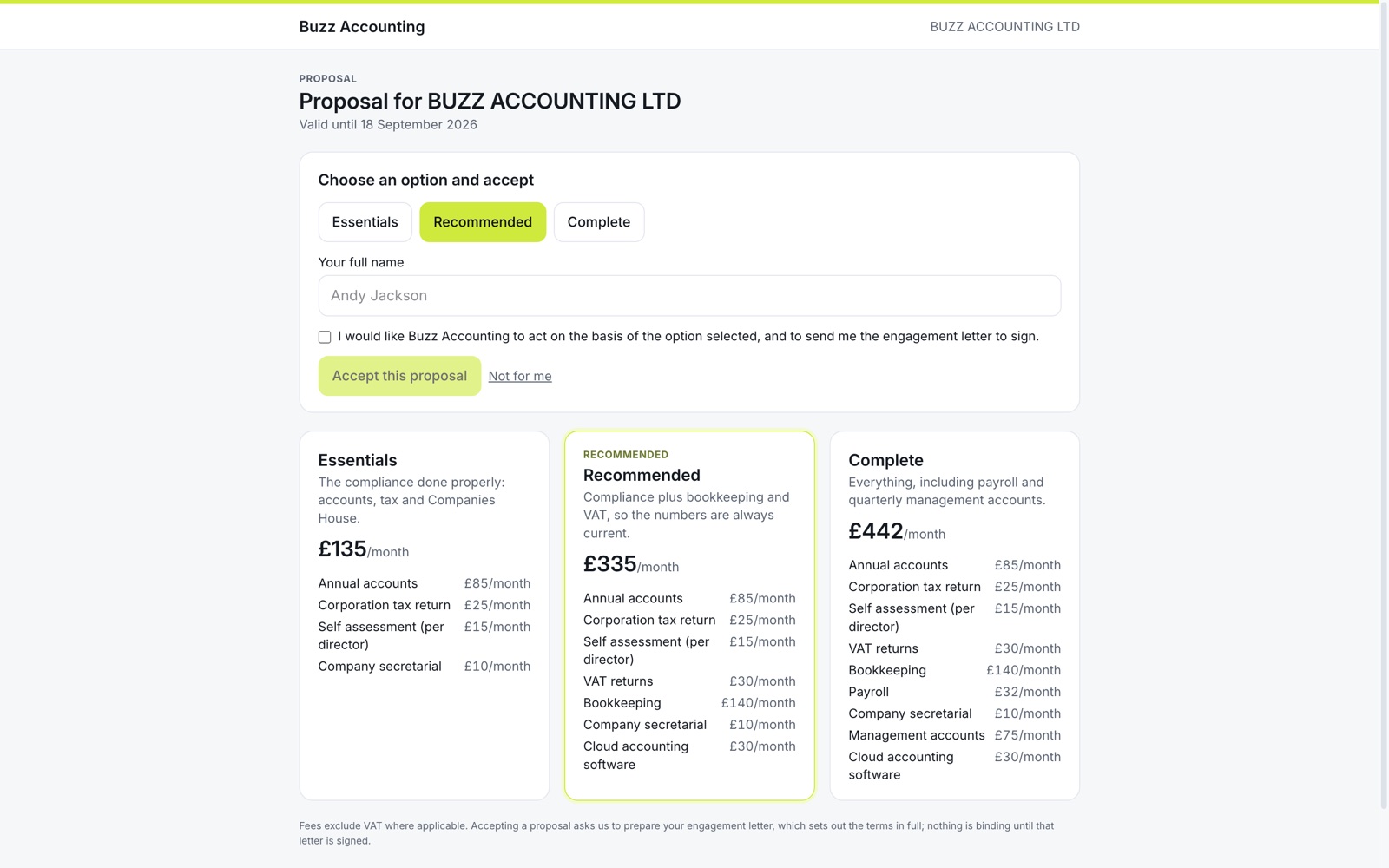
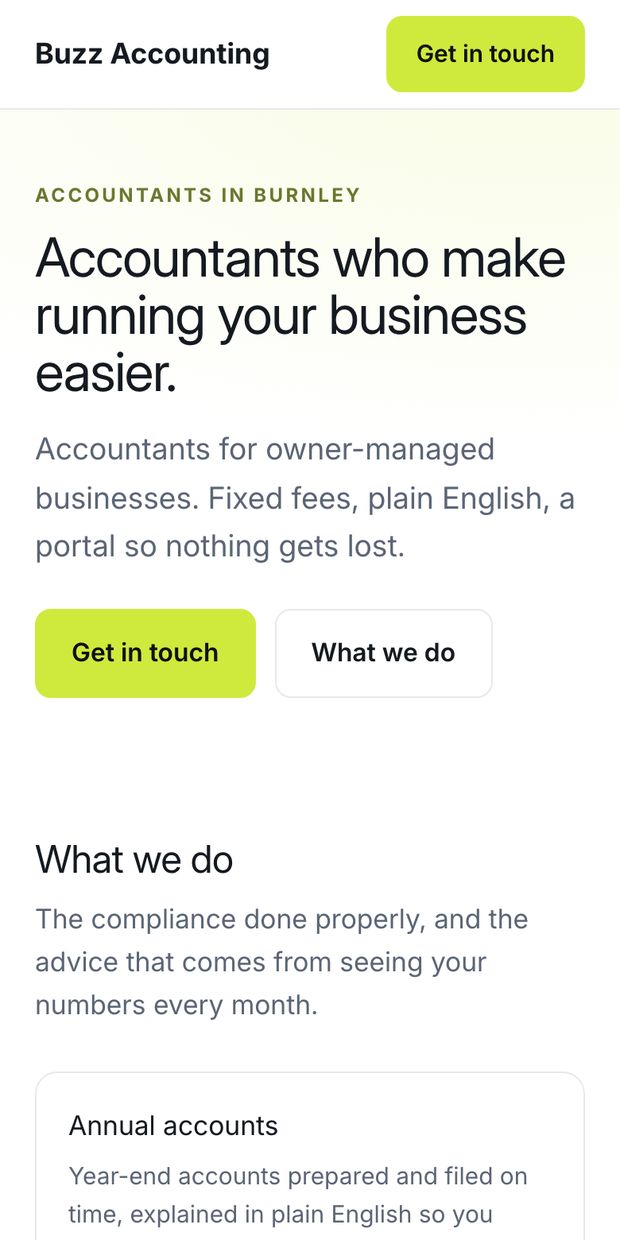
Then the front of the funnel got the same treatment, and became a product of its own: Growth Engine. A CRM shaped like a practice, not a sales team — pipeline stages that end in an engagement letter, values in annual fees. Proposals priced from the firm's own catalogue: type a turnover and a headcount, get three priced options, send a link. The prospect accepts online and the engagement letter writes itself from the firm's template with the agreed services and fees, goes out for e-signature, and onboarding starts. In front of it all, a website — the firm's own domain and colours, a library of client guides published weekly so it never goes stale, every enquiry landing in the pipeline. Two products, one login, one record from prospect to client.

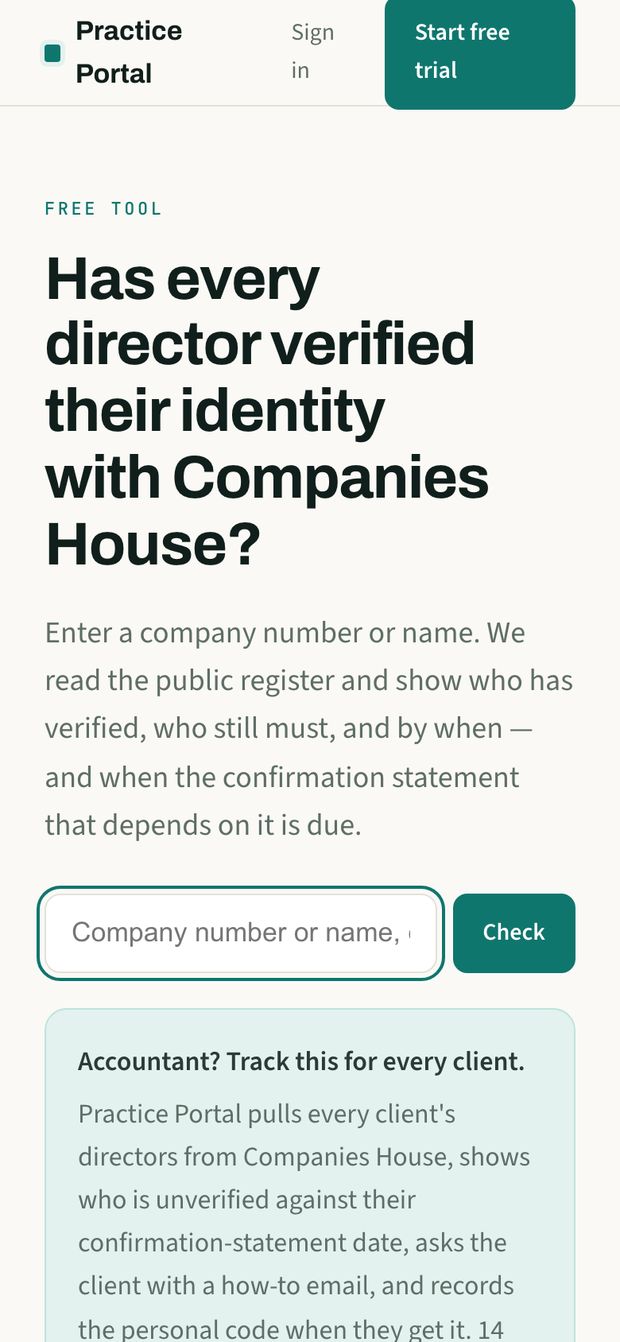
The free identity-verification checker is the marketing: anyone can check any company's directors against the new Companies House rules in seconds, no sign-up. Its first real run found an overdue unverified director — in our own firm.

What we built
  • White-label client portal — documents, requests, messages, key dates, e-signing with a fingerprint certificate; no client passwords, ever
  • A CRM for practices — pipeline, organisations built from Companies House, people, tasks, Capsule import, a web-lead endpoint
  • Proposals & pricing — a service catalogue with price rules (flat, per head, turnover bands), three-option proposals accepted online, engagement letters generated and sent for signature automatically
  • A website + content engine — a site per firm with a guide library that publishes weekly, feeding enquiries straight into the CRM
  • Companies House throughout — clients built from the register, deadlines refreshed nightly, director ID verification tracked per officer
  • Self-serve from day one — sign-up, fourteen-day trials, plan gating, per-firm data isolation in the database engine, monitoring that emails us before a customer does
The decisions that mattered
01

Products, not projects

Chivvy's trade is bespoke builds. But twice now a build for our own businesses has been general enough to sell: the Acquisition Engine, and this.

The rule we applied: productise only what we already run ourselves in production. Every feature on the pricing page existed and was in daily use before a stranger could pay for it.

02

The prospect never sees our name

A firm's clients see the firm — its logo, its colour, its email address on every message, its name on the engagement letter.

White-label is the product. Practice Portal appears exactly once: in the small print of the sign-up the firm itself goes through.

03

Acceptance does the paperwork

The moment a prospect accepts a proposal is the moment firms usually lose a week to Word: find the letter, merge the fees, chase the signature.

So acceptance is the trigger: the letter is generated from the firm's own template with the agreed services and fees, sent for e-signature, the pipeline moves itself and onboarding starts. The firm finds out by email that it all already happened.

2products, one platform and login
3priced options per proposal, from the firm's own rules
6team members on the mid plan
14days free, no card, on every plan
Where it got to

Live, self-serve, and already in daily use.

Practice Portal (from £49), Growth Engine (£129) and a built-and-hosted Website (£99) run at app.practiceportal.uk with our own accountancy practice as customer zero — real clients, real deadlines, real signatures. Everything together is £199 a month, fourteen days free.

Next case studyBusiness Nous →
Get started

Tell us what's eating your week.

Tell us the job that keeps not getting done. We'll tell you if software can take it off you, and what it costs.

Start a conversation